SAC IT2010012 - Brughiera del Dosso
SAC IT2010012 -BRUGHIERA DEL DOSSO
PROTECTED AREA MANAGEMENT AUTHORITY: Lombardy Ticino Valley Park
OTHER PROTECTED AREAS IN THE NATURA 2000 SITE: Lombardy Ticino Valley Natural Park
TOTAL AREA OF THE NATURA 2000 SITE: 455 hectares
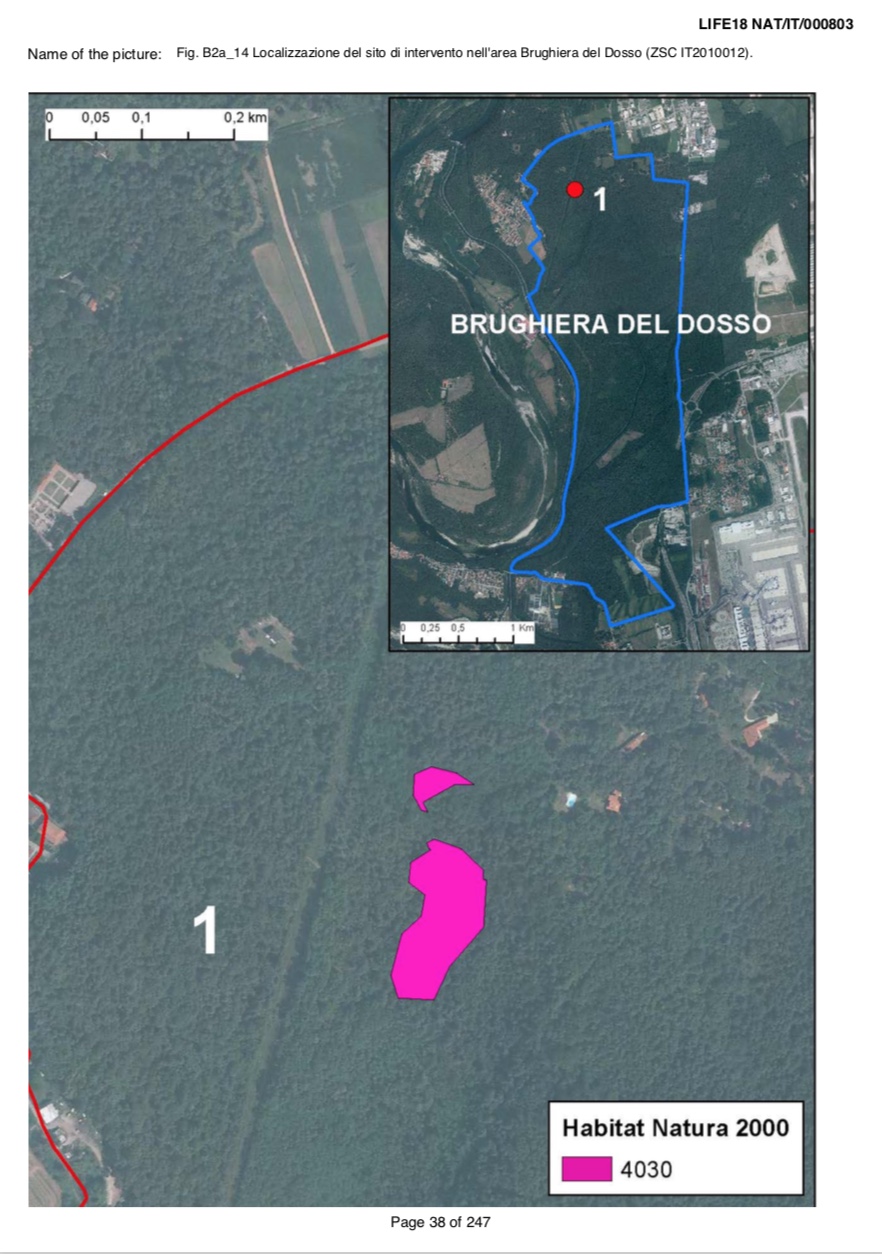
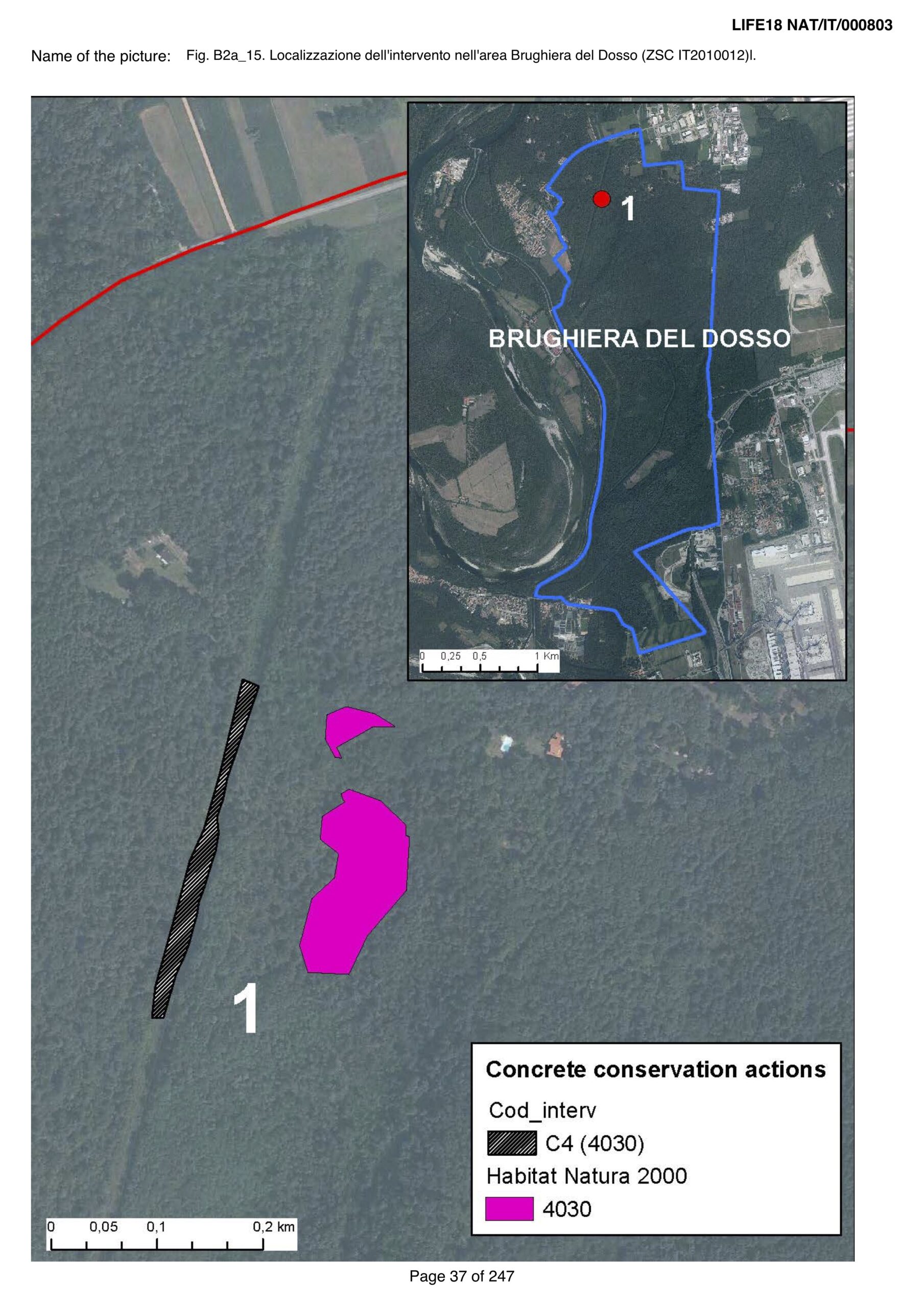
HABITAT AREA AFFECTED BY INTERVENTION: 0,415 hectares (habitat 4030)
MUNICIPALITIES AFFECTED BY THE PROJECT INTERVENTIONS: Somma Lombardo (VA)
USES OF THE AREA: part of the SAC is privately owned, while part is public; the percentages of ownership are not indicated in the standard form. Within the SAC, most of the area is occupied by semi-natural or natural environments, while only a small portion is occupied by human-developed areas. However, the SCI is in close proximity to the Malpensa airport area, which it borders to the east.
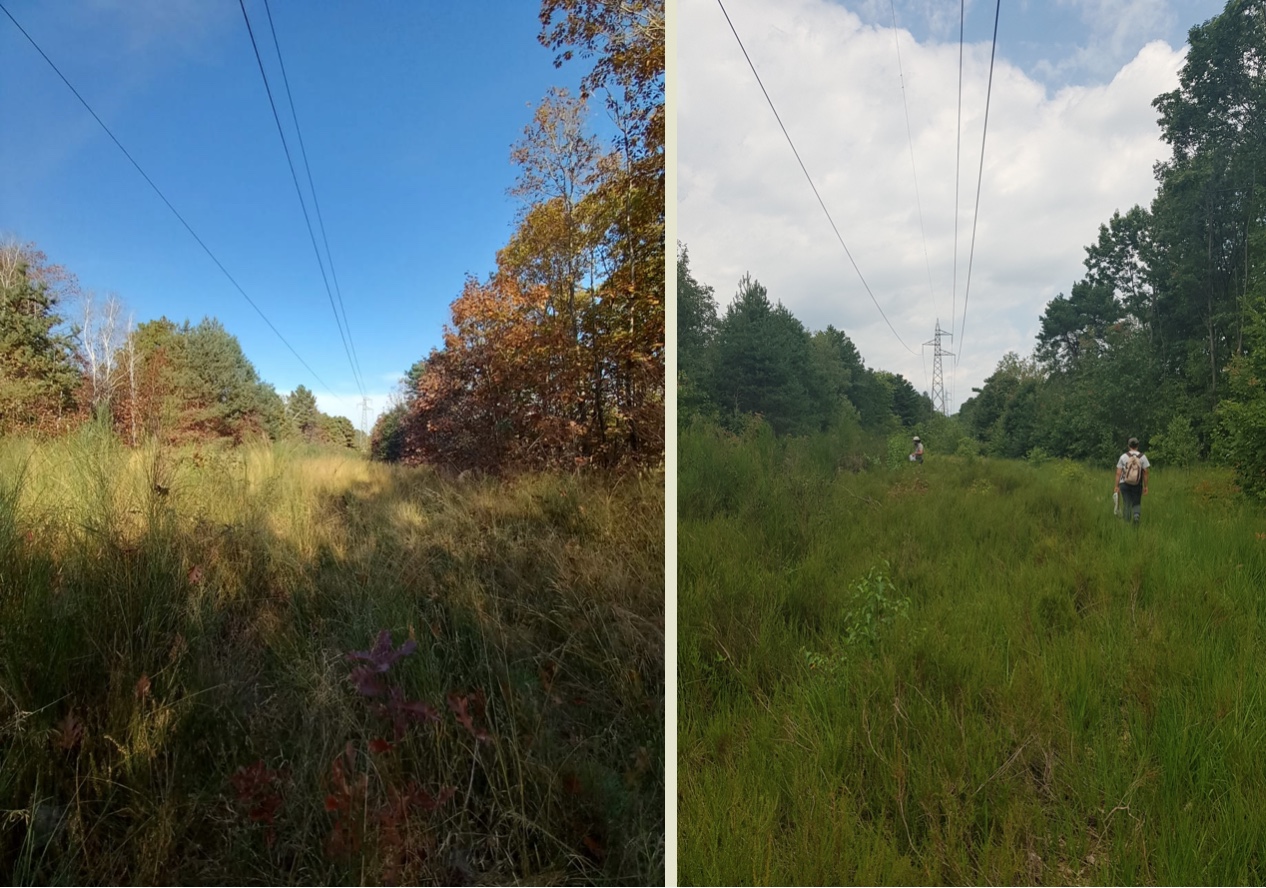
DESCRIPTION: the habitats within the SCI include various types of woodland and shrubland. The woodlands are dominated by oaks and native conifers (Pinus sylvestris) and conifers (Pinus rigida), with the presence of chestnut trees and invasive species (Prunus serotina, Robinia pseudoacacia). Among the shrublands, the most widespread is Calluna vulgaris, often degraded by the invasion of tree species.
There are no plant species of Community interest, however, several species are of conservation and biogeographical interest despite not being included in the Annexes of the Habitats Directives, such as: Anemonoides nemorosa, Corynephorus canescens, Cyclamen purpurascens, Erythronium dens-canis, Hepatica nobilis, Hypericum humifusum, Polygonatum odoratum, Primula vulgaris, Saxifraga tridactylites.
Several species of Community interest have been recorded in the SAC, including: 4 mammals (particularly Martes martes, Mustela putorius, and a sighting of Canis lupus in 2012), 11 birds, 5 reptiles, 3 amphibians, 9 bony fish, 1 agnathus (Lethenteron zanandrei), and, among the insect species of Community interest, Lucanus cervus and Cerambyx cerdo.
CONSERVATION STATUS: the conservation status of the various habitats is partially compromised due to lack of management; the heathland in particular is undergoing progressive degradation, except in a few areas where restoration work has been carried out in recent years. In several areas, coenoses dominated by invasive alien tree species (Ailanthus altissima, Prunus serotina, Robinia pseudoacacia) are establishing themselves, posing a threat to habitat conservation.
Overall, the heath covers an extremely limited area.
IMPORTANCE OF THE PROJECT AREA FOR SPECIES AND BIODIVERSITY CONSERVATION: the site falls within the larger project area, encompassing a circular area with a radius of approximately 40 km (including eight SCIs). This area requires strengthening the conservation of target habitats, resulting in a basic system that is phytogeographically homogeneous and well-preserved. This system is shared between the two administrative regions involved and gravitates around the area's three main waterways (Ticino, Sesia, and Po), which serve as important ecological corridors.
This site in Lombardy is one of the few where it is practically possible to restore the heath to a favorable state of conservation thanks to the interventions envisaged in this project, creating a useful corridor for connecting to other areas. Many other heathlands in Lombardy, not being included within SCIs or SCIs, are difficult for the Park Authority to operate.
The closure of habitat 4030 has also been particularly critical here, and the lack of prompt intervention will preclude the future of this habitat. In this western portion of the Po Valley, it possesses unique characteristics in terms of its floristic composition and phytogeographical characteristics compared to the same habitat in other parts of Italy or Central Europe.
The species that dominate the habitat in this site are: Calluna vulgaris, G. germanica, G. tinctoria, and Cytisus scoparius. Due to the porous substrate, this site is home to annual species that flower in spring before the summer drought, such as Filago minima, Micropyrum tenellum, Jasione montana, and Aira caryophyllea, as well as species of conservation interest such as Gentiana pneumonanthe. From a lichenological perspective, there are also several differences compared to the Central European situation.
PLANNED ACTIONS: new reconstitution of habitat 4030.
INTERVENTION SITES
LIFE18 NAT/IT/000803
The Drylands project is funded by the LIFE Programme of the European Union

Partners