


Now that the project is concluded, we are happy to share the results achieved! The Layman’s report, on page 12, also includes a graphic representation of the results accomplished (the data is for the end of 2024), and the website’s “Actions” page displays the primary results obtained, broken down by category of action.
Here are some important ones:
Improved Nature, Species and Biodiversity
The natural conditions of species, habitats, and total biodiversity have significantly improved.
Twenty-six open, arid habitat patches have been restored: six heathlands with Calluna vulgaris (Habitat 4030), totaling 134,650 m²; sixteen pioneer grasslands with Thero-Airion or mature grasslands with Festuco-Brometalia of the acidophilous subtype (Habitat 6210), totaling 62,142 m²; and four acidophilous grasslands with Corynephorus canescens (Habitat 2330). Additionally, 10,343 m² of the target habitat has been rebuilt.
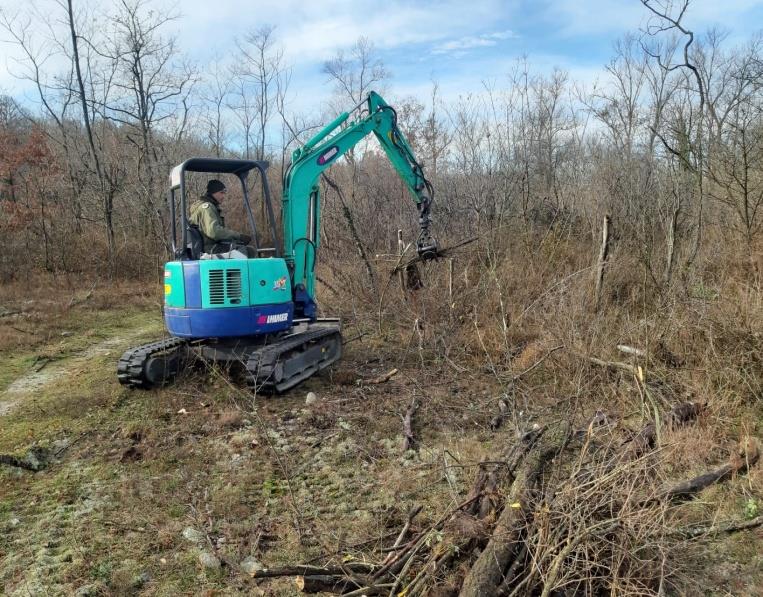 Action C2: removal of invasive woody species
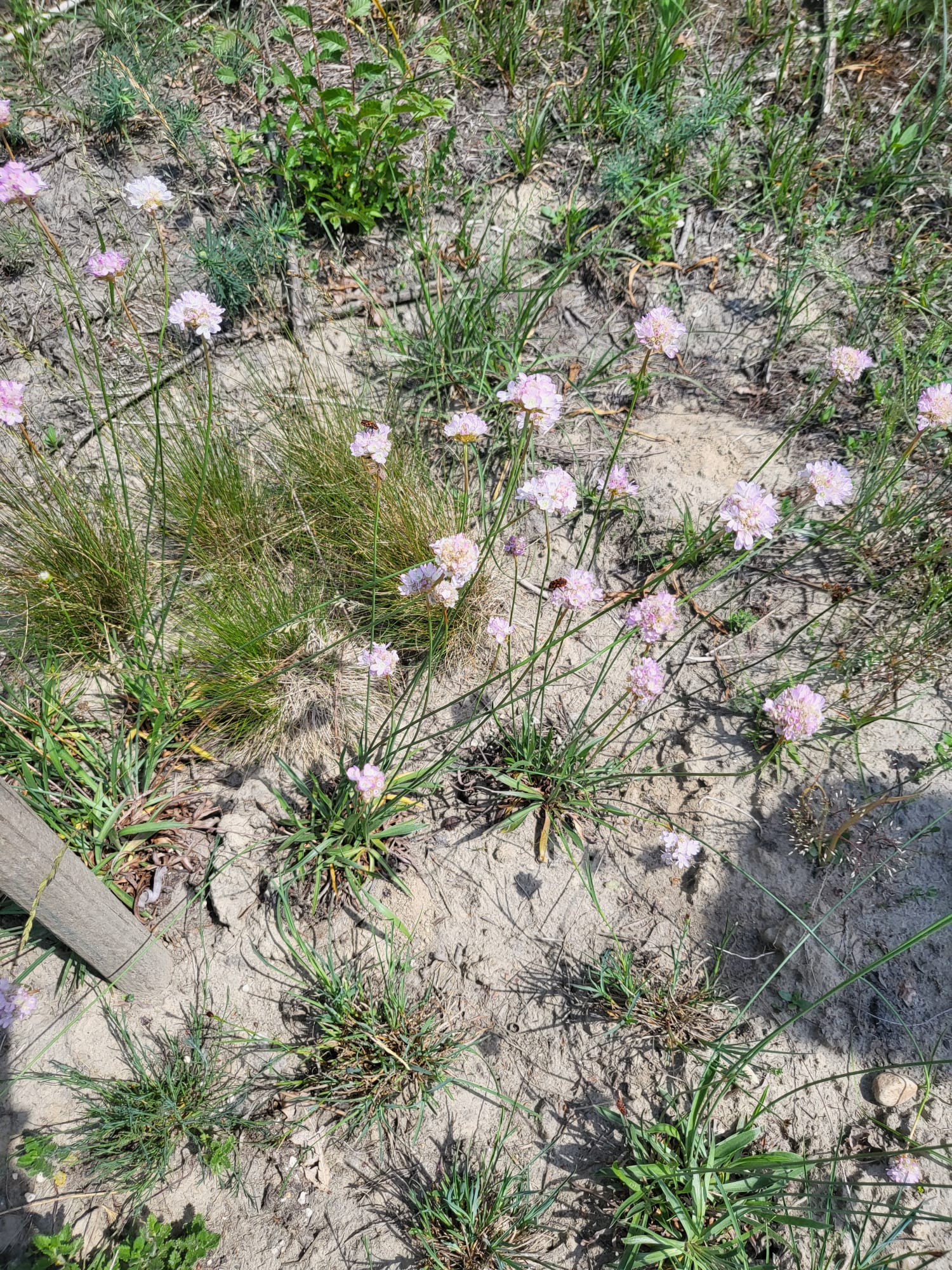 Action C3: Improvement of the floristic composition
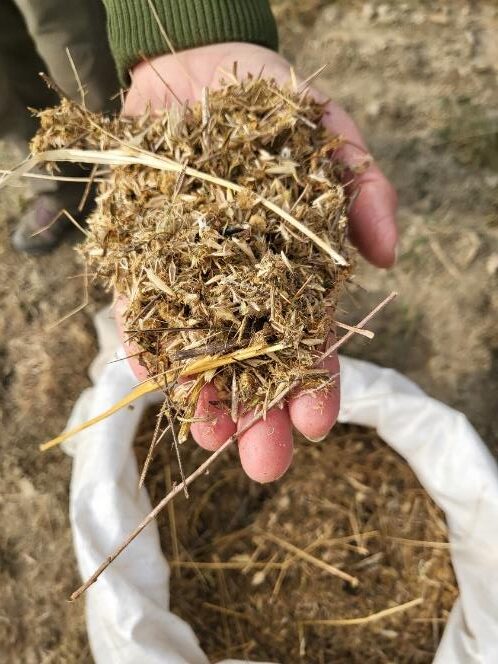 Action C4: Creation of new patches
Replication/Transfer
Three Guidelines have been developed and distributed to various user groups: one for assessing conservation indicators for the project’s target habitats, one for implementing educational and outreach activities to improve these habitats, and one for involving stakeholders in their protection.
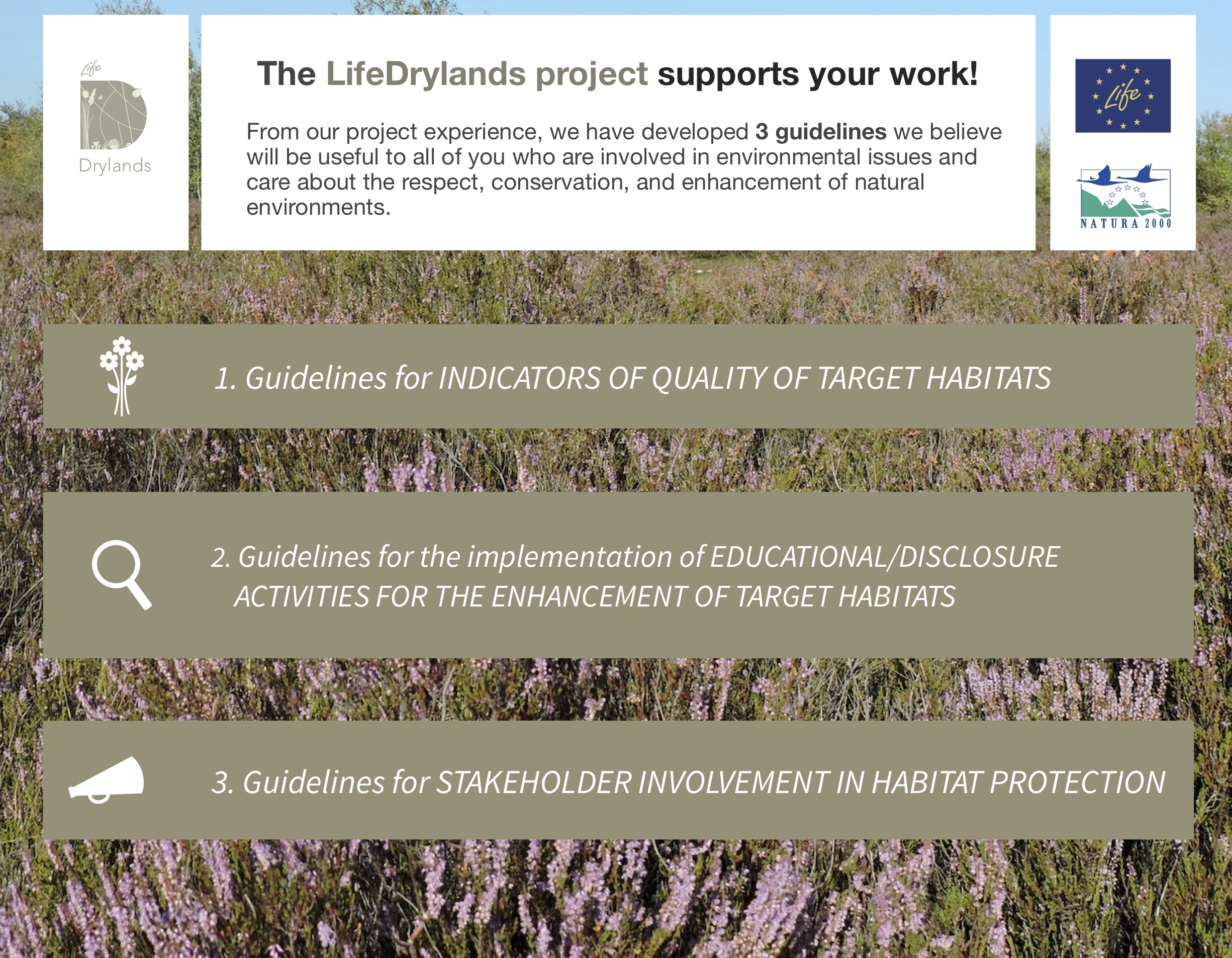 Action E2: Guidelines
Six technical training sessions were also offered for nature professionals, with an emphasis on managing and monitoring the project’s target habitats. The courses took place at the partner parks from 2021 to 2025.
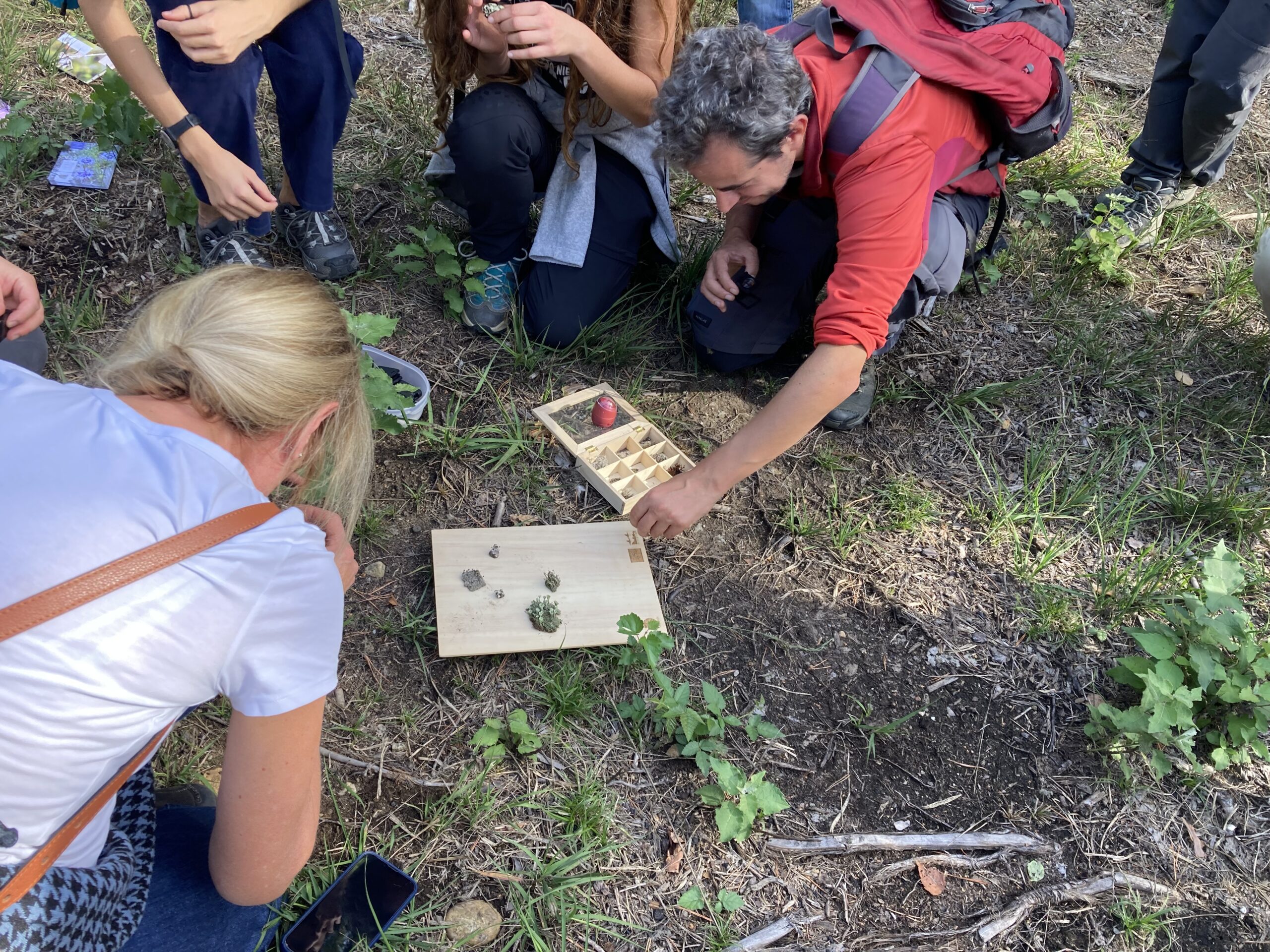 Action E2: Stages for professional training in Nature
In order to share best practices and experiences with other LIFE initiatives, numerous networking events were also organized. LIFE RICOPRI, LIFE Sandersen, LIFEorchids, LIFE GESTIRE 2020, LIFE FORESTALL, LIFE SouthMoravia, LIFE OREKA MENDIAN, LIFE 4 Pollinators, LIFE GRANATHA, LIFE Trockenrasen, LIFE SHEPFORBIO, LIFE ModernNec, LIFE Claw, LIFE URCA PROEMYS, LIFEEL, and LIFE INSUBRICUS were among the eighteen LIFE projects, both Italian and non-Italian.
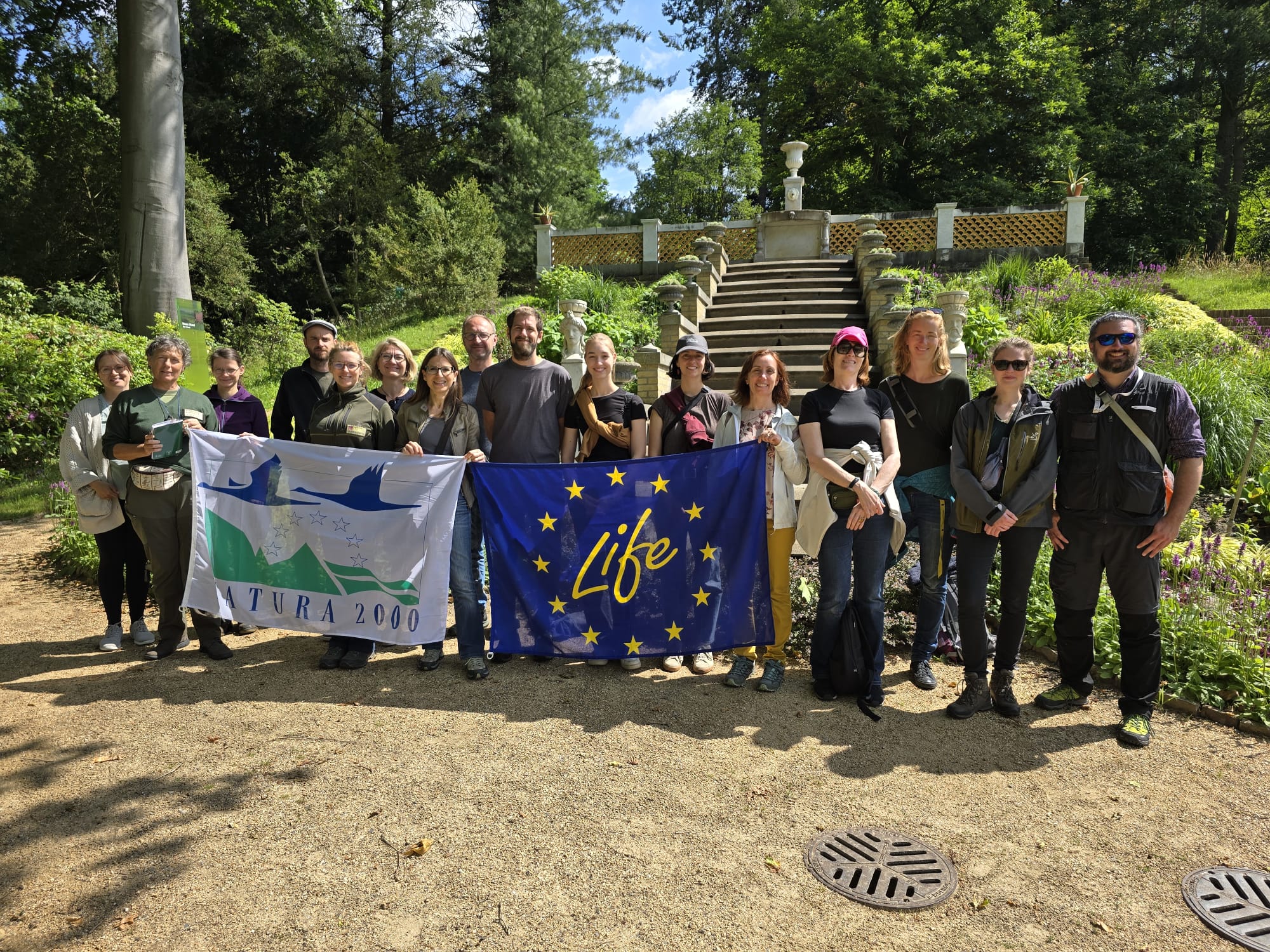 Action E3: Networking visits to similar LIFE projects
Communication and dissemination
The LIFE DRYLANDS project’s communication efforts, which comprised a wide range of activities linked by the goal of making the recipients of the communication “protagonists” of the project’s distribution, stimulating interest and engagement, were a large portion of the project.
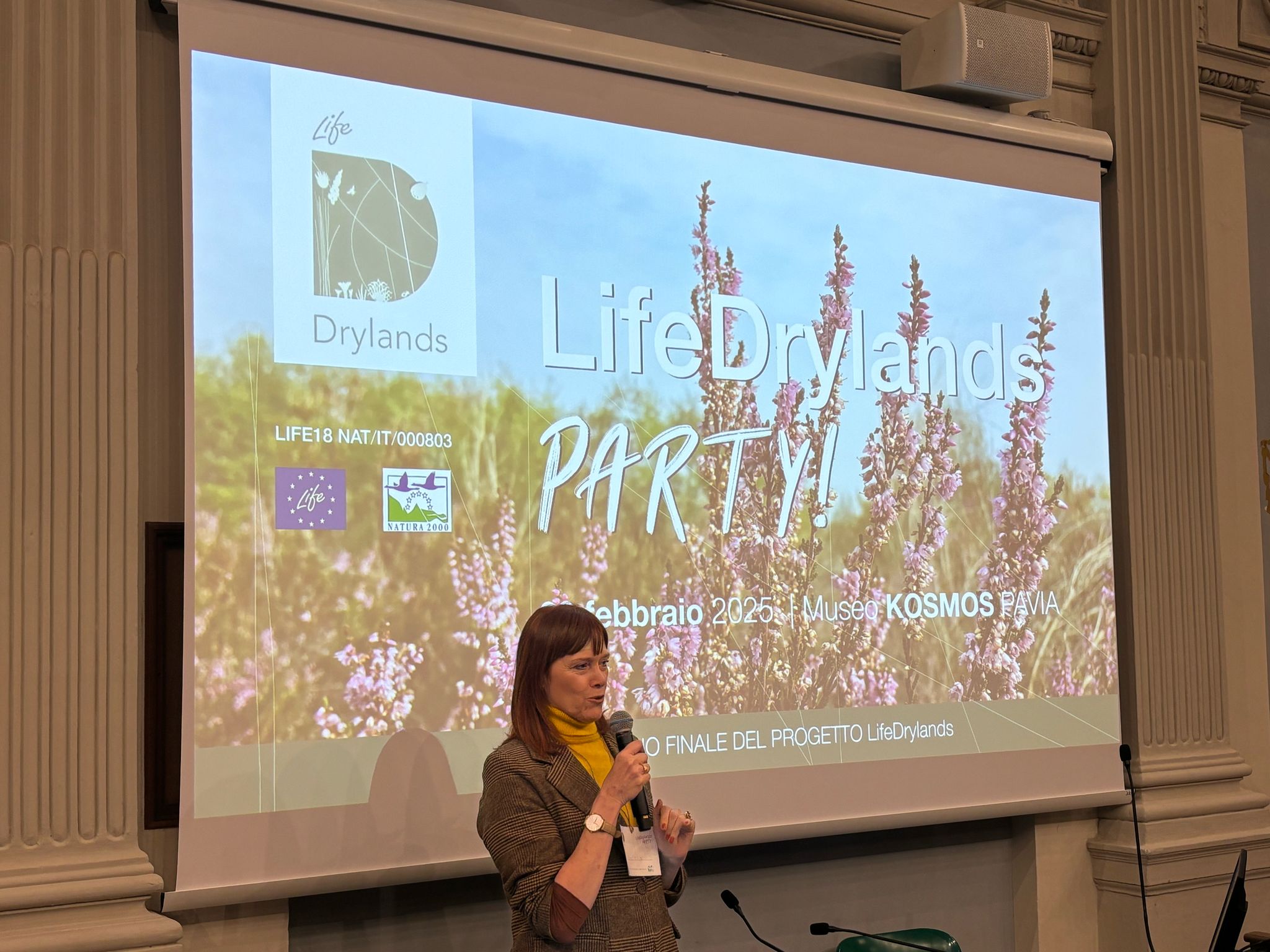 Action E1: Communication
Fifteen educational activities were held with the project’s partner parks for families and the general public. Many activities were also carried out in collaboration with schools, including 35 classes from seven schools, including the launch of a PCTO (Path for Transversal Skills and Orientation) program. These activities were based on active learning methodological methods (IBSE – Inquiry-Based Science Education, Hands-on, Interpretation approach), and many of them made use of the Discovery Kit “Io abito, tu abiti, egli HABITAT,” which was expressly designed for the project.
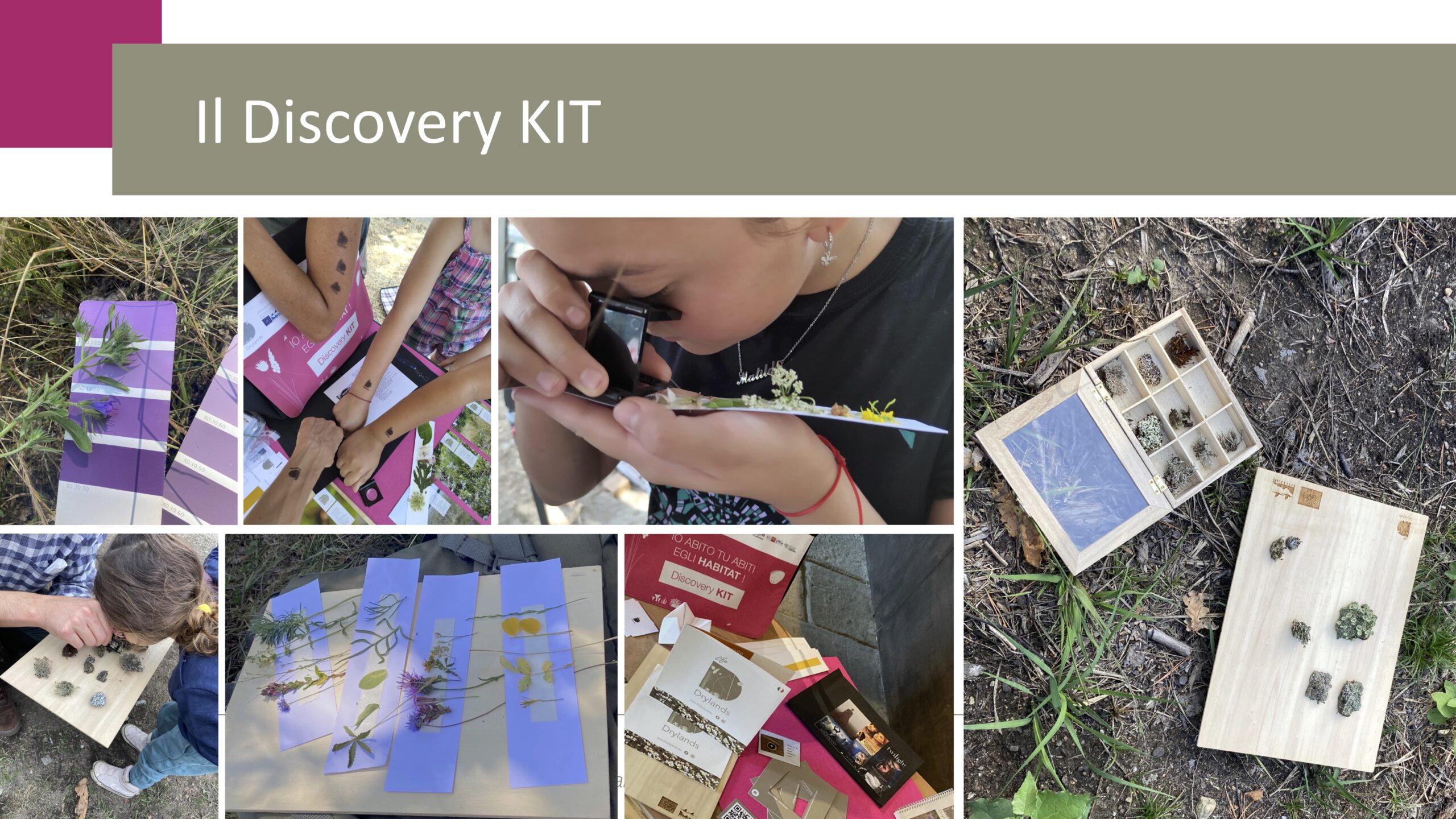 Action E4: Dissemination
The project was presented at a number of scientific conferences, including four international and four national, as well as a conference-related dissemination event. LIFE DRYLANDS has also been recognized as a successful management case in five scientific conferences and two dissemination events.
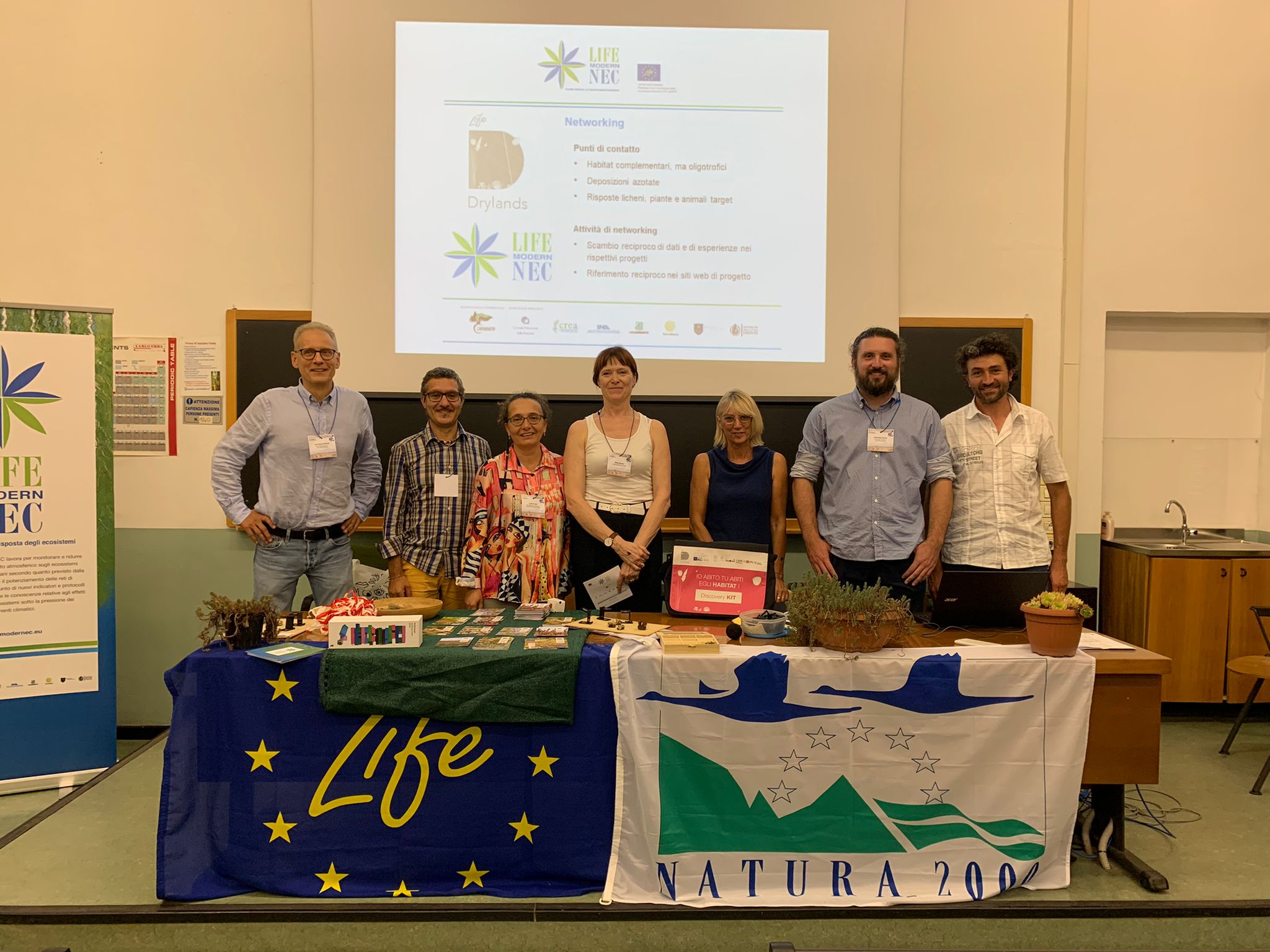
Action E5: Publication of scientific papers and participation in scientific conferences
//////////////////////////////////////////////////
The expected results were:
Improved Nature, Species and Biodiversity ✔︎
= H2330 (very rare in Italy): 8.216 m2 returned to favorable conservation status; 1.450 m2 created ex- novo (overall 17% change expected compared to the initial situation)
= H6210/6210* – acidophilous type 34.34: 69.920 m2 returned to favorable conservation status; 10.825 m2 created ex-novo (overall 4% change expected compared to the initial situation)
= Habitat 4030 (typical Southern Alps lowland aspect): 126.650 m2 returned to a favorable conservation status; 8.800 m2 created ex-novo (overall 19% change expected compared to the initial situation)
Replication/Transfer ✔︎
= 1 replication and transfer plan (20 pp)
= 3 guidelines (indicators of conservation status, educational activities focused on the habitats and involvement of stakeholders), and commitments from 60 management bodies to implement them
= 3 visits to transfer and/or replicate the project and its methods. Several administrative authorities (Regione Piemonte, Regione Lombardia, protected areas) have already declared their support and willingness to collaborate on project implementation in their own geographical range.
= 3 networking visits to similar LIFE projects to exchange information with a final outcome report.
= 6 stages for professional training in Nature (management and monitoring of the target habitats).
3. Communication, dissemination, awareness raising ✔︎
= 1 communication plan
< 2.500 followers on social networks
> 7.500 single visits to the website
= 10.000 trifold flyers
= 500 or more users registered to the e-mail database
> 200 participants in two conferences
> 1.200 people reached by 12 events (4 in each park) for the greater public
= 3 headmasters, 15 teachers, 600 students reached over the span of the project
> 400 individuals reached through scientific congresses
> 400 individuals reached through scientific/academic social networks
> 400 individuals reached through scientific journals
> 1,000 copies of the Layman’s report
= 2 bilingual videos (Ita-Eng)
< 10 press releases.